Your first swim workouts can feel stressful. How should you swim? What does a proper session look like? Do I need any equipment, and how do I use it correctly? Those definitely aren’t the only questions that may pop into your head. Let’s take a look at what a workout like this can look like.
It’s important not to go too hard too soon. If you’re starting out, it’s better to build solid technique and strength than to swim tens of kilometers with poor form. Every coach will tell you it’s much easier to learn new habits than to re-learn old ones. Early on, you can leave the planning to a coach or join group sessions and pick up some inspiration.
If you already have some swimming under your belt, it’s time to improve your fitness and get the necessary yards/meters in. Start easy, let your body adapt to the new load, and keep focusing on quality of movement. Before long you’ll feel yourself getting faster, swimming more, and getting tired later.
What equipment do I need?
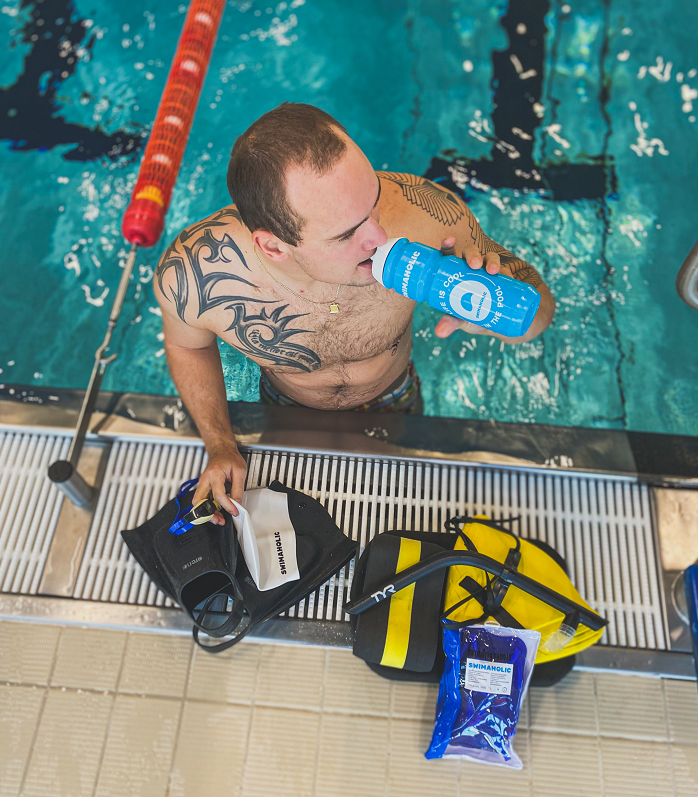
When it comes to gear, at the beginning you can often get by with just your body. But any session can be spiced up by adding a
kickboard and
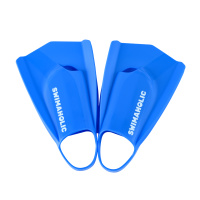
fins, or a
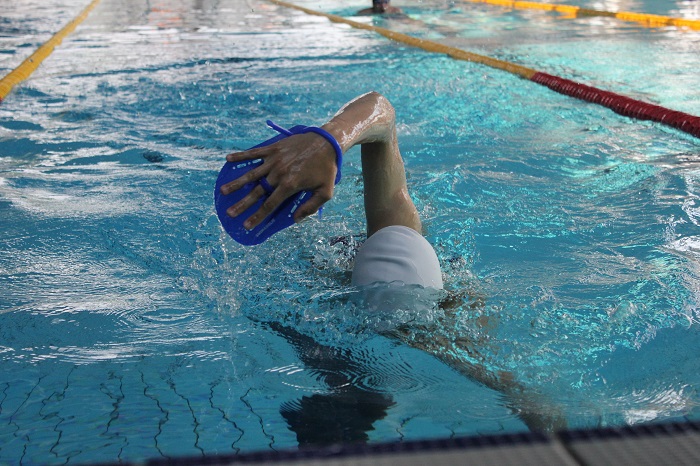
pull buoy and
paddles. They’ll give you extra support and help you progress.
Which strokes should I swim?
There are four competitive strokes: butterfly, backstroke, breaststroke, and freestyle (front crawl). To start, it’s better to skip butterfly and focus on the other three. You’ll probably swim most of your training freestyle, but there’s no harm in switching to breaststroke when you feel tired, or to backstroke when you’re running out of breath. It’s up to you how you structure your session and which stroke becomes your favorite.
Workout 1
If you’re truly just starting, there’s no rush. Take regular, short breaks to catch your breath and relax your muscles, but avoid standing around at the wall for too long—you’ll just get cold.
Start with a warm-up to loosen up and raise your body temperature. Swim an easy 50 meters of any stroke, then 150 meters kicking with a board to warm up your legs. It’s up to you whether you add fins or even ditch the board.
During the main set—usually repeated series—swim 50 meters at an easy pace. There’s no need to hurry, so take about 20–30 seconds rest between repeats and keep going for roughly 20–30 minutes, or until you start to feel tired. You can alternate strokes, add equipment, or simply swim one stroke steadily.
The cool-down helps loosen muscles and calm the body. You can include it during the session, but at the end it should be at least 100 meters.
Workout 2
If you’ve already swum a bit in the pool, or you feel ready for a harder session, it’s time to move forward.
Warm up with 300 meters of any stroke, then do 50 meters of a light sprint (optional), and finish with 150 meters kick only, with or without a board.
The main set will be three “seventy-fives,” meaning 3×75 meters. The first 75 is kick only, the second 75 is pull only, and the third 75 is full stroke. Repeat this whole sequence 8 times; alternate strokes or add fins and paddles. Between each set of three, take a short rest or swim an easy 50 m as a recovery swim.
Cool down with at least 200 meters.
Workout 3
If you’re a beginner but want a tougher challenge, this workout is for you.
Warm up with 200 meters of any stroke.
Fins will come in handy for the main set, but they aren’t mandatory. Start with 400 meters at a relaxed pace. Then put on fins (if you want) and do 3×100 m kick faster, with rest after each 100. Finish with 6×50 m sprints, resting after each 50 (it’s better to lengthen the rest than to slow down while swimming). Take off the fins and swim an easy 100 meters. You can repeat the set if you still have energy.
Finish with at least 200 meters easy swim (cool-down).
Abbreviations and terms
In swimming you’ll often come across plenty of terms and abbreviations that can be unfamiliar and confusing. That’s why we’ve prepared a list of the most common ones, including explanations.
Terms
Warm-up – time to warm up the body and muscles. It should be easy swimming, but it’s fine to pick up the pace occasionally.
Main set – everything between the warm-up and the cool-down. It includes the sets, individual drills, which stroke to swim, and the pace that makes sense at that moment.
Cool-down – time to breathe out, loosen up, and recover. You’ll see it either at the end of a workout or sometimes during it. Ideally swim it on your back so you can breathe comfortably and stay as relaxed as possible.
Easy – means swimming at a pace you could keep for a full hour without needing to stop.
Fast – means swimming at a higher pace; you’re working, but it’s not an all-out sprint.
Sprint – means swimming as fast as you can at that moment.
Abbreviations
WU – warm-up
CD – cool-down
Fly – butterfly
Back – backstroke
Breast – breaststroke
Free – freestyle (front crawl)
IM – individual medley (Fly, Back, Breast, Free; used in more advanced workouts)
Now all that’s left is to pack your
swim gear and head to the pool.